Limnocorrals
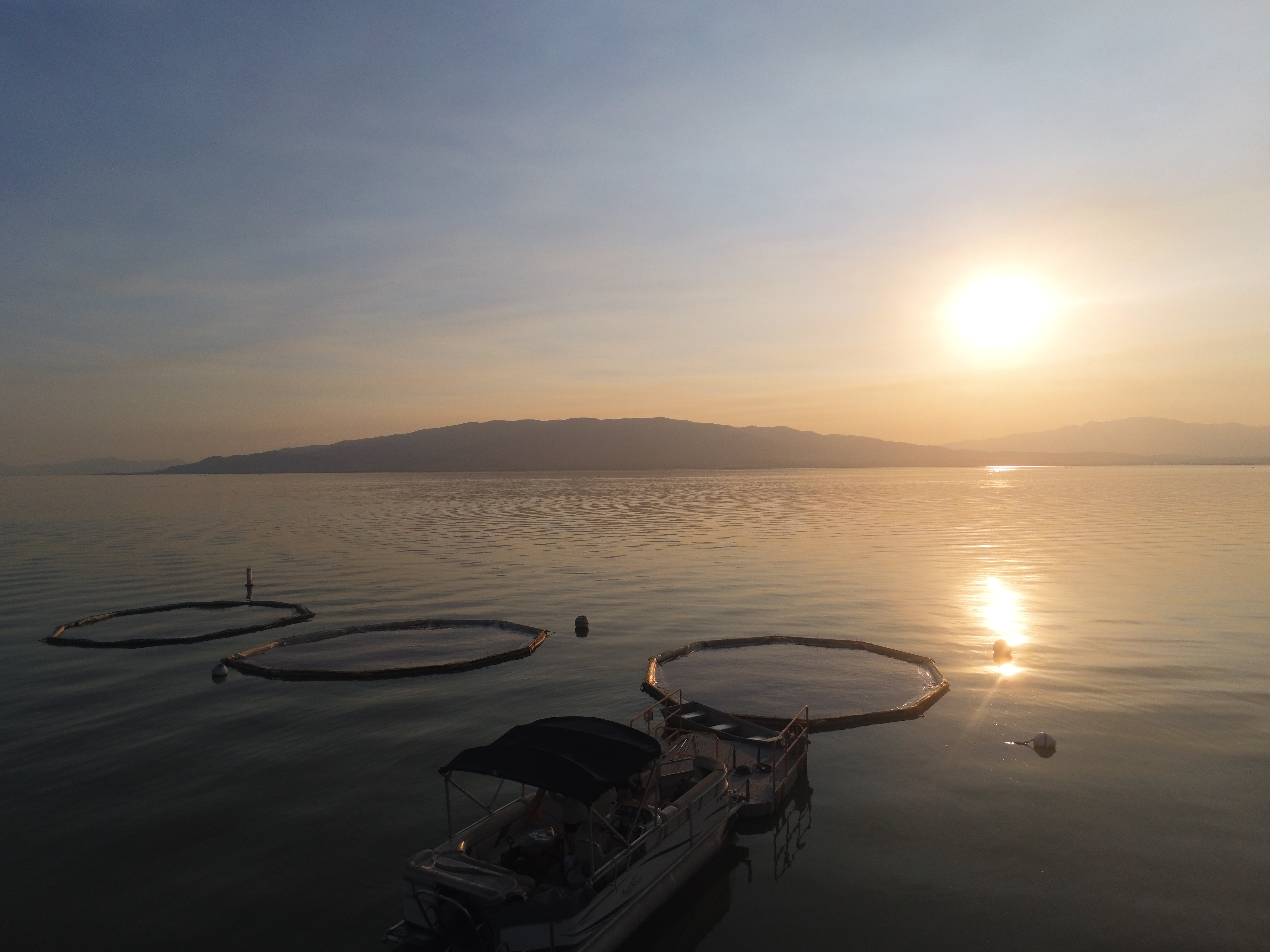
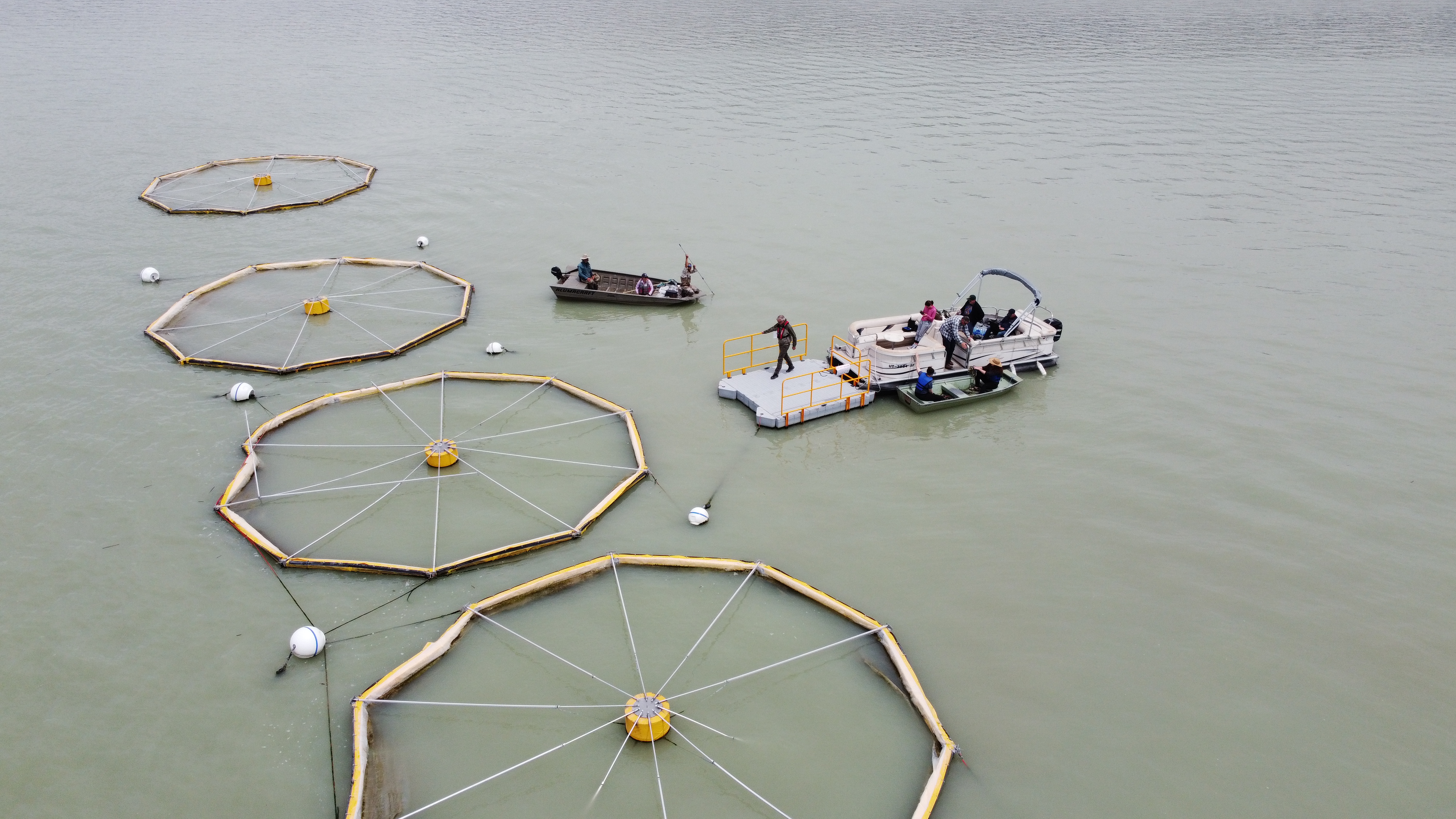
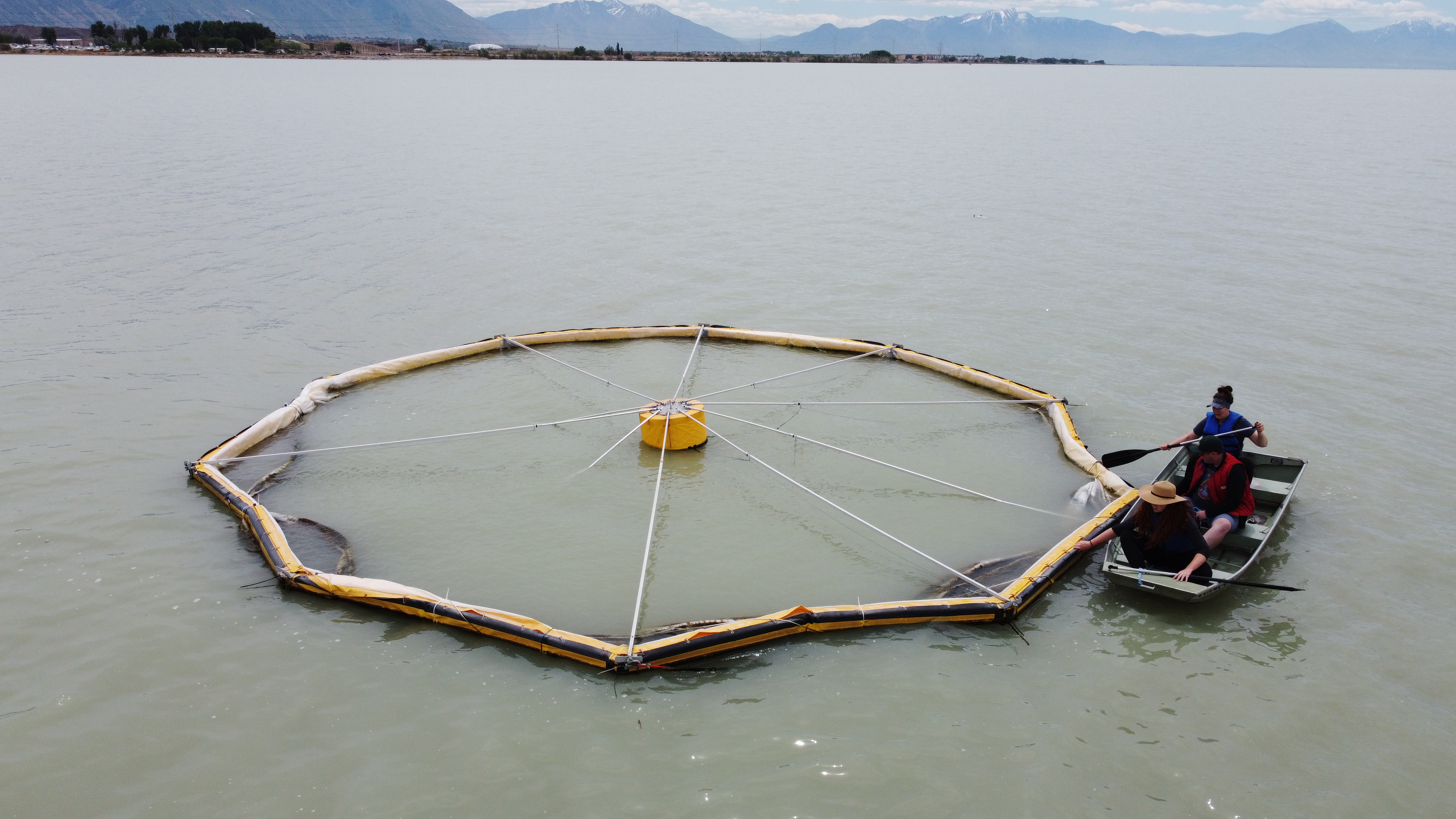
The Utah Lake Nutrient Cycling Studies are based around the use of limnocorrals. Limnocorrals, a type of mesocosm, are tools that ecologists use to study lake ecosystems under physical and biological constraints. Limnocorrals consist of flexible fiberglass columns that extend to the bottom of a body of water, creating a tight seal. This isolated water column allows scientists to study lake processes such as lake eutrophication and water chemistry. The object of a mesocosm is to isolate certain processes within an environment in order to observe, analyze, and test various components at play within a complex ecosystem.
Initial Construction
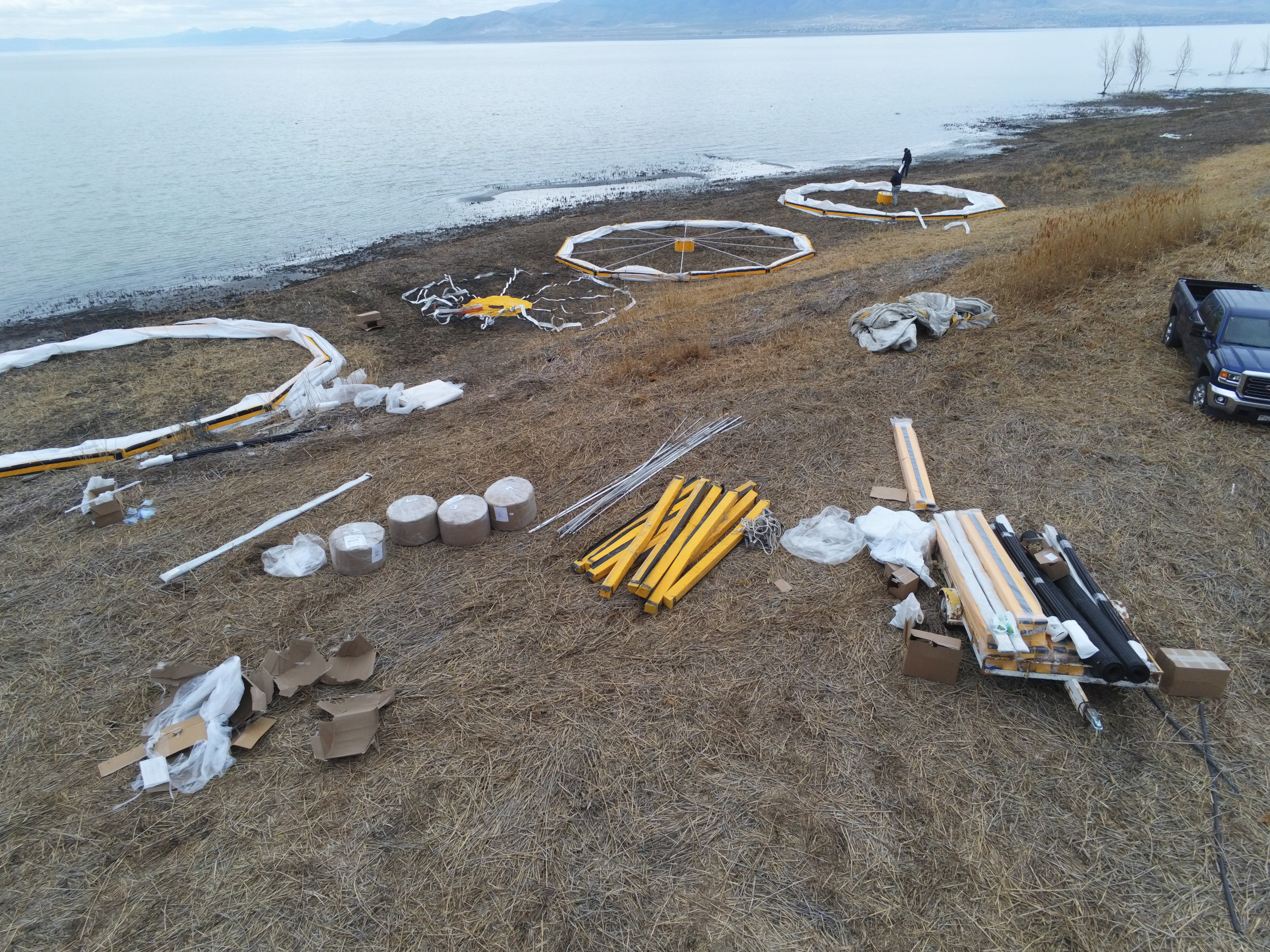
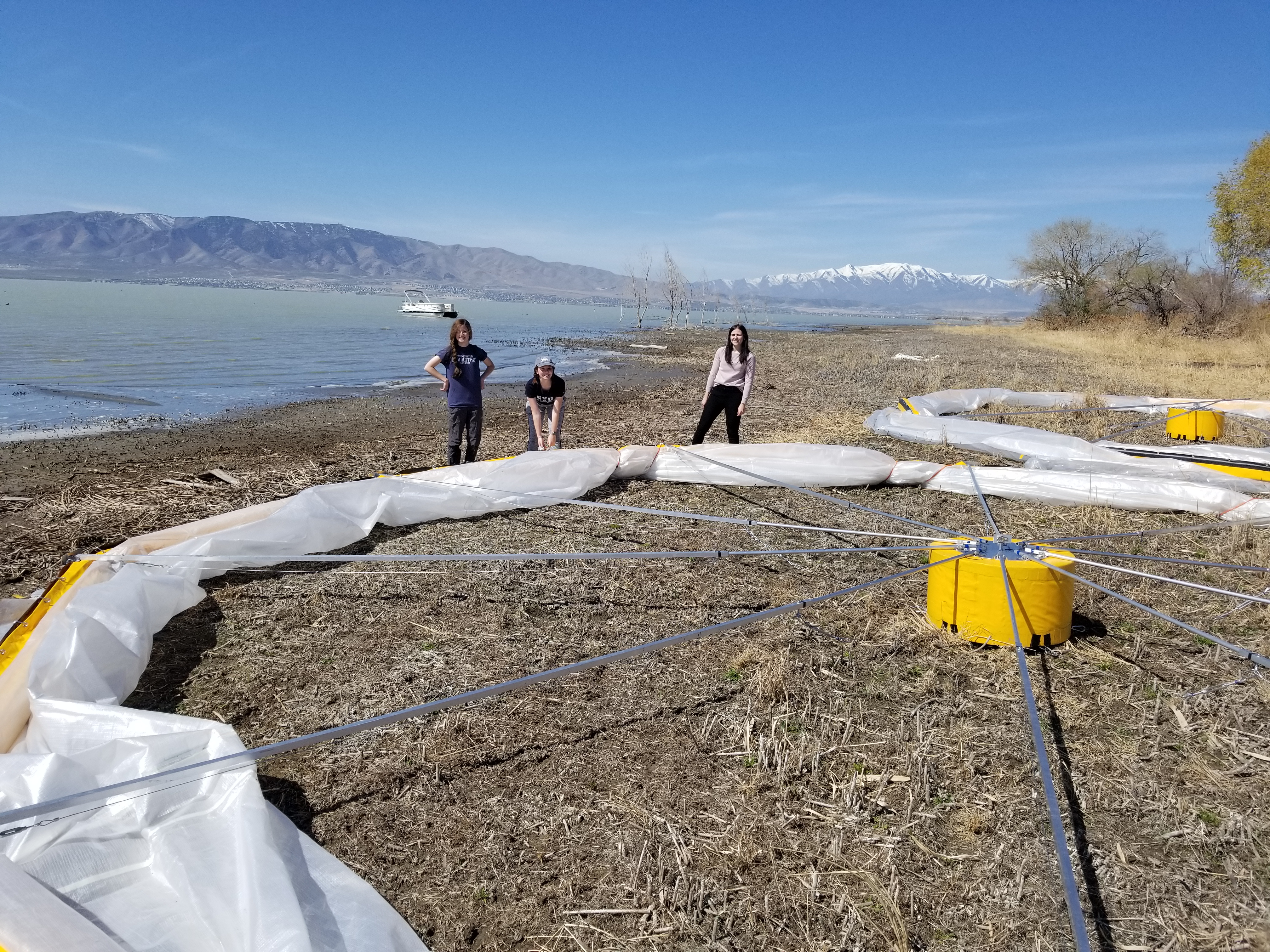
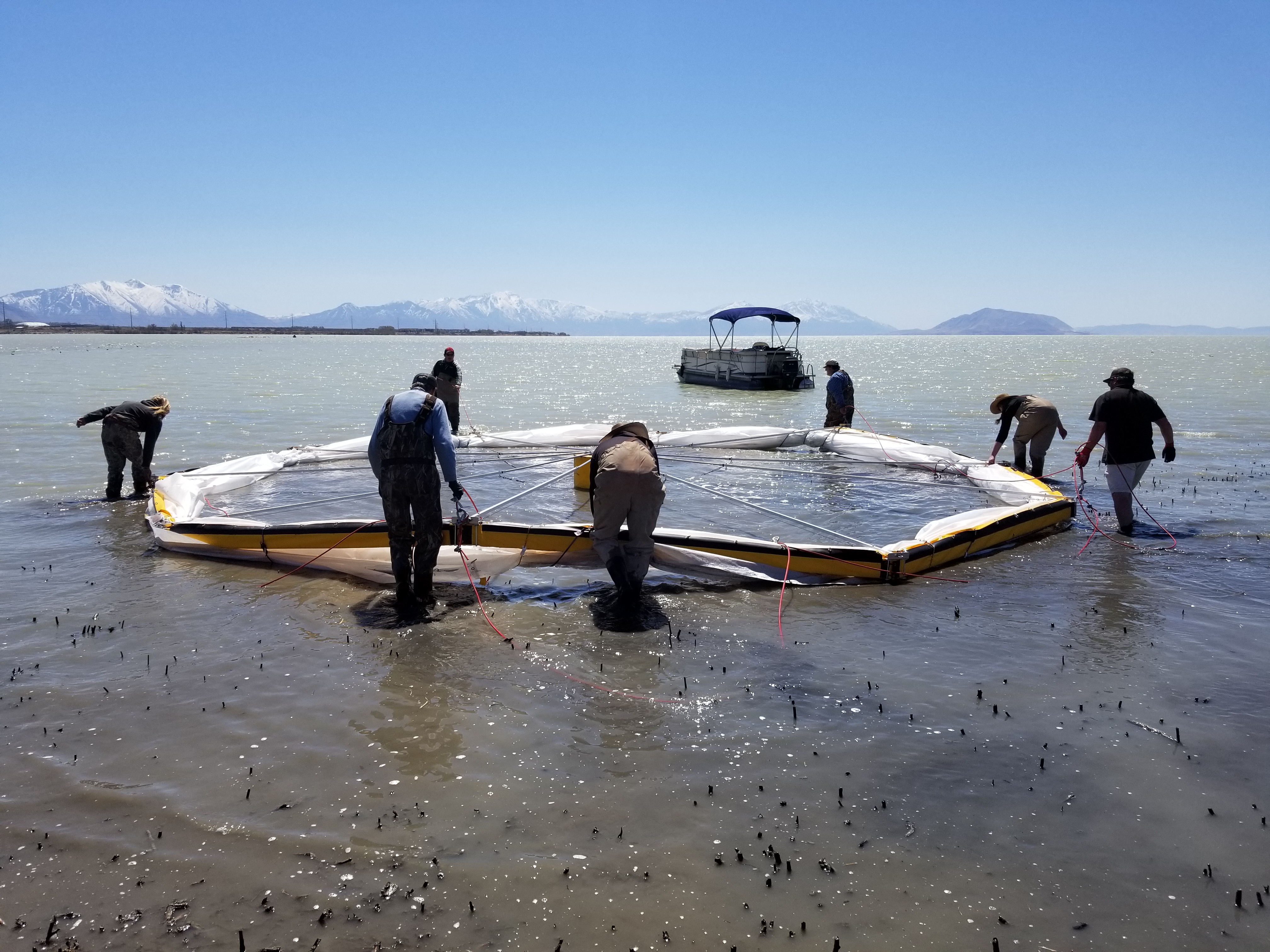
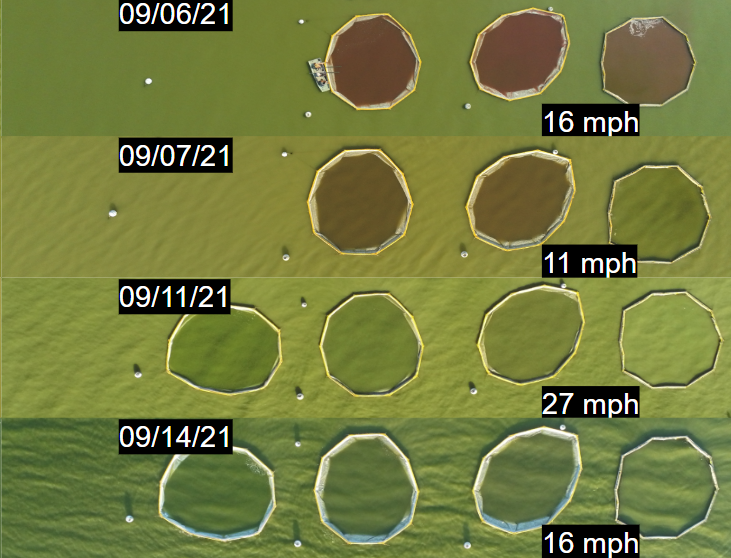
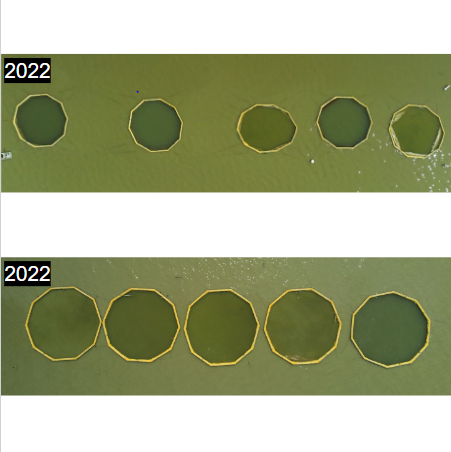
The limnocorrals were constructed on the north shore of Utah Lake. They were then towed to an area of the lake with a water depth of between 5 and 6 feet. In 2021, the stability of the corrals was increased by using center floats and struts at the top and by anchoring the floats to the lakebed. In 2022, there were no center floats and struts, but the corrals were anchored to the lake bed. There were also 10 corrals, 5 in shallaw water and 5 in deep water.
Structural Issues
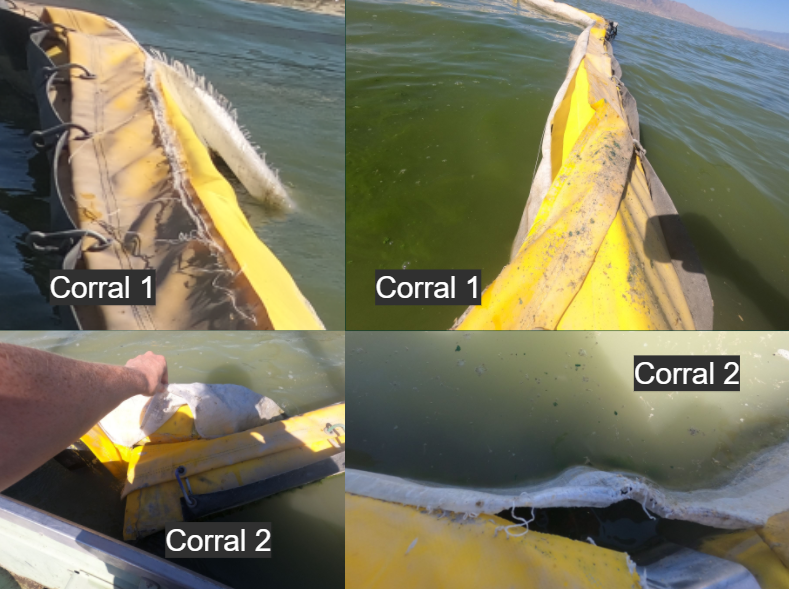
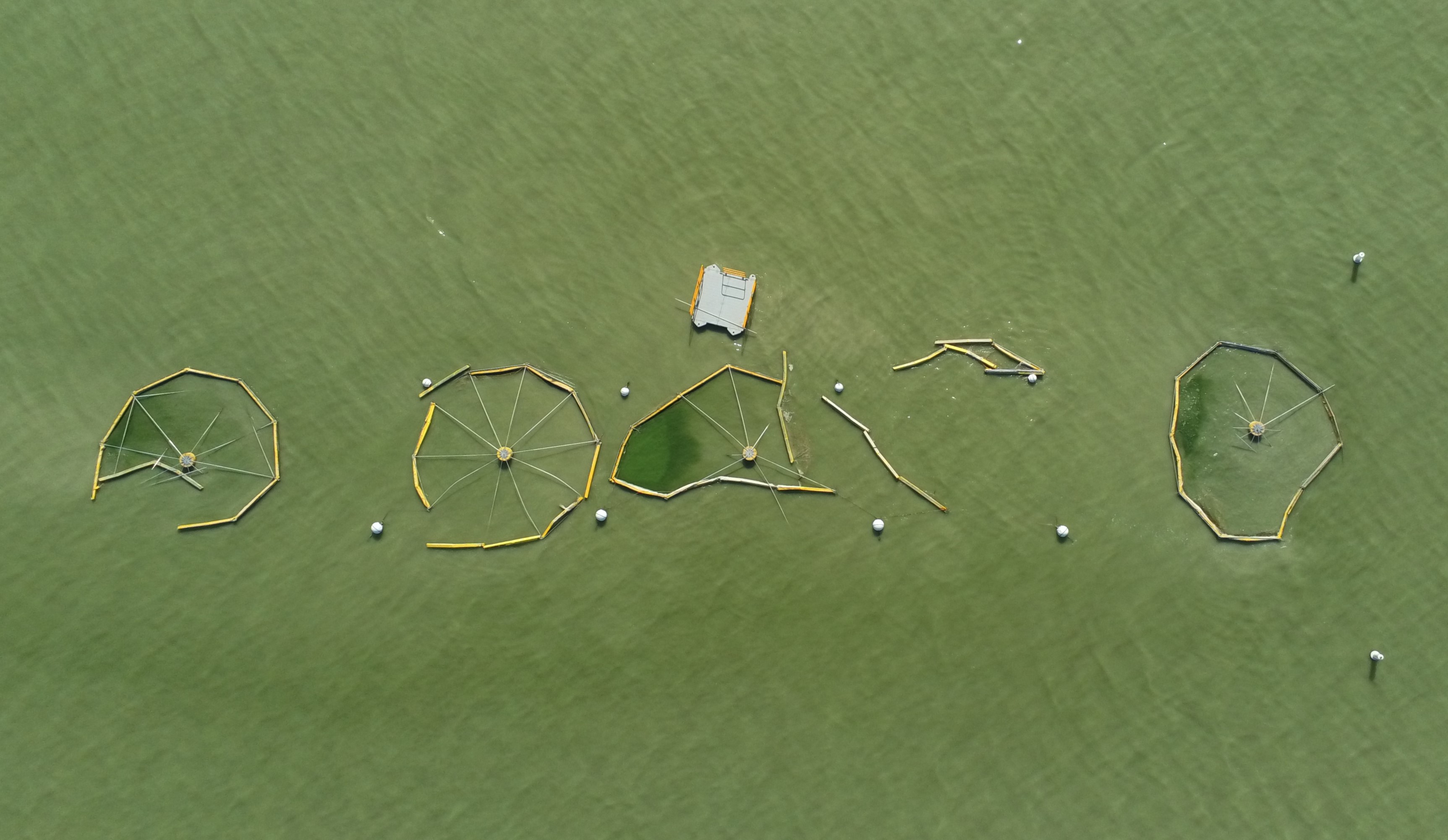
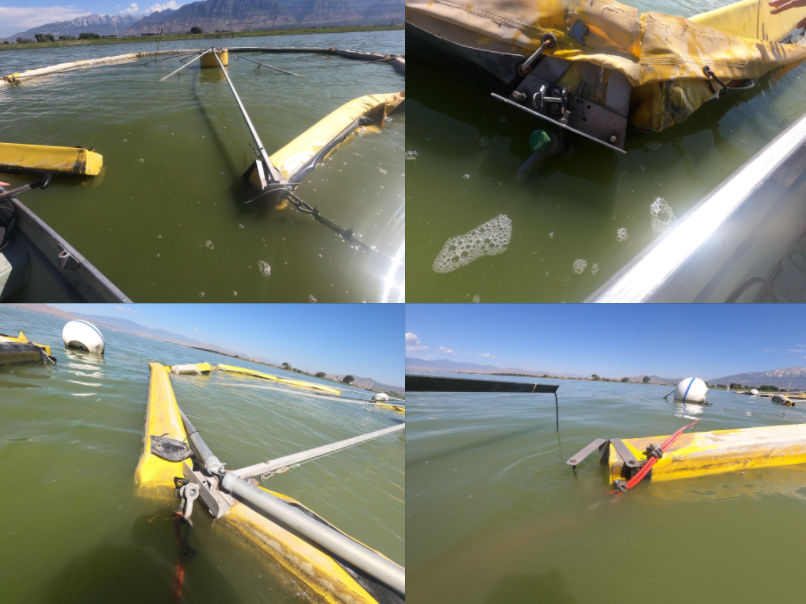
These structural issues only occured in 2021. Due to high winds and strong waves on the lake, many of the corrals began to come apart. The center struts loosened and then began to rip the flexible fiberglass skirts. At this point, the corrals were removed from the lake and redesigned to be more flexible in order to withstand these forces of nature.
Structural Adjustments
After encountering some structural issues with the limnocorrals, they were redesigned to be more stable. This stability was acheived by removing the center floats and struts. This made the limnocorrals less rigid and more flexible, allowing the corrals to withstand the natural wind and wave forces on UL. This new design was used for the 2022 corrals.
BYU Environmental Engineering Laboratory

Dept. of Civil and Environmental Engineering