Phosphate Concentrations
2021
Summary
Water column phosphorus (P) is replenished by Utah Lake (UL) sediments in a buffered system.
Background
The goal of this experiment was to gather data to make better informed decisions about P cleanup and management in the Utah Lake to maintain ecosystem health. Specifically, we wanted to quantify the current phosphate partitioning between dissolved and sorbed phases, quantify the rate of P partitioning, and to have a overall better understanding of P loadings in the UL.
Methods
In Situ Dosing Methods
We dosed our experimental mesocosms with P and monitored the P concentration over two weeks. We used rhodamine as an instantaneous signal to track water movement through the mesocosm to adjust our results accordingly.
In Situ Dilution Methods
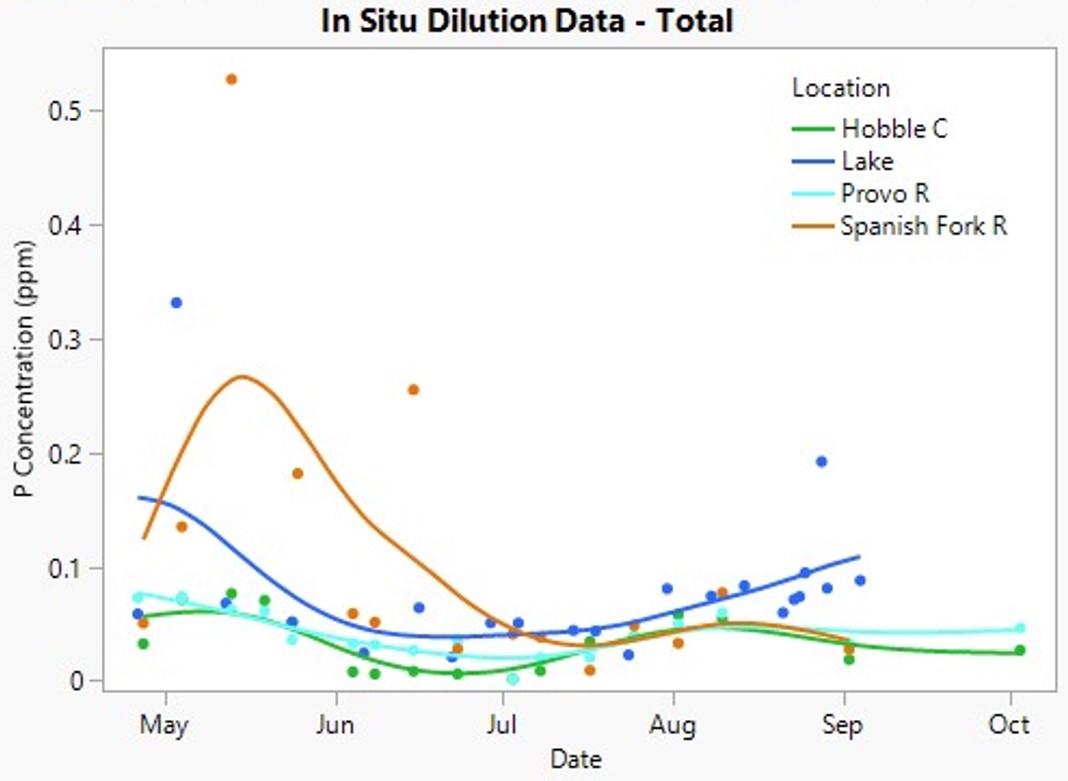
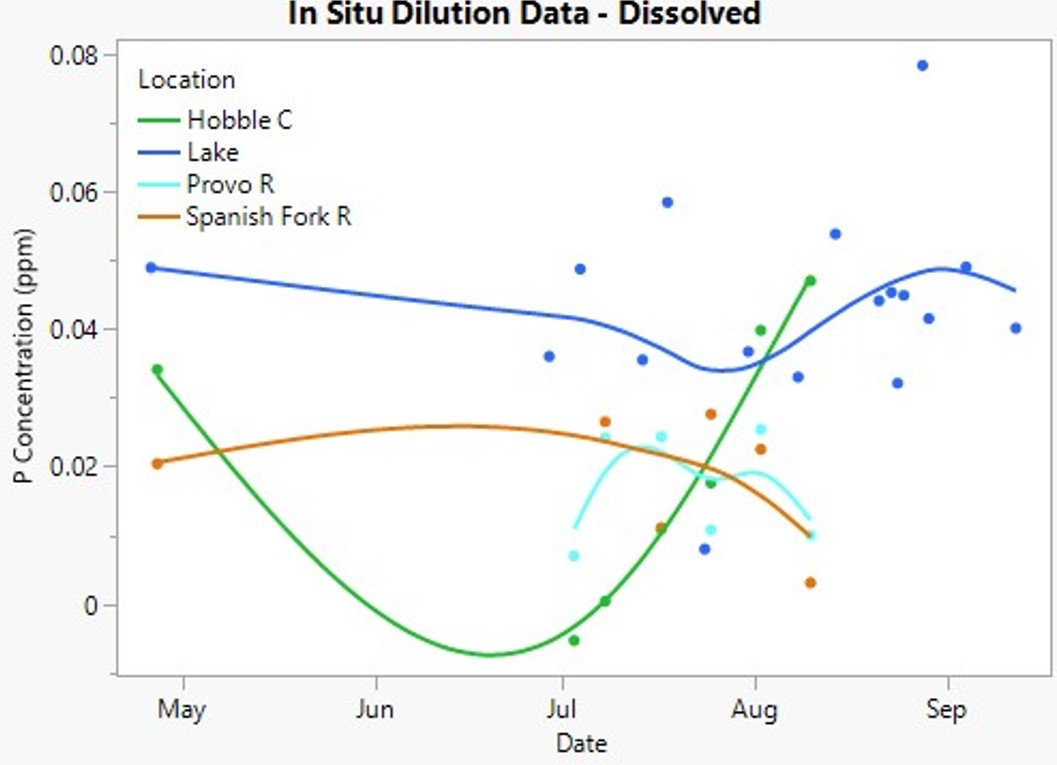
We monitored P concentration in three major UL inflows and in UL during a season of record high spring runoff to observe how the water column responds to dilution in situ.
Bench-Scale Methods
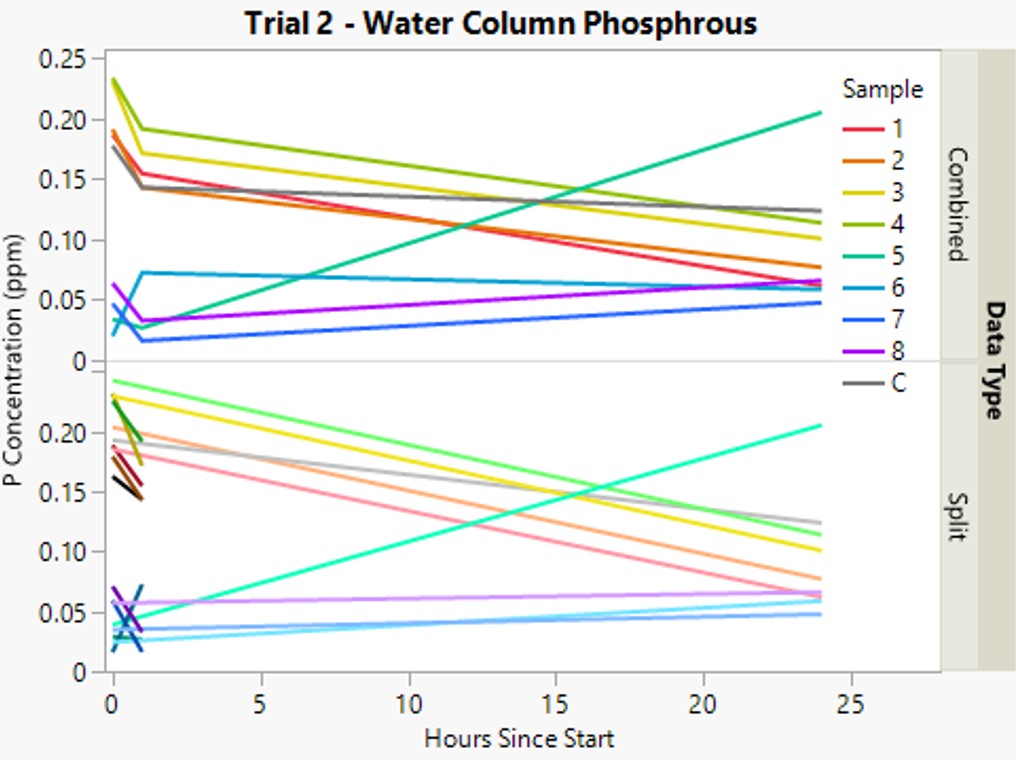
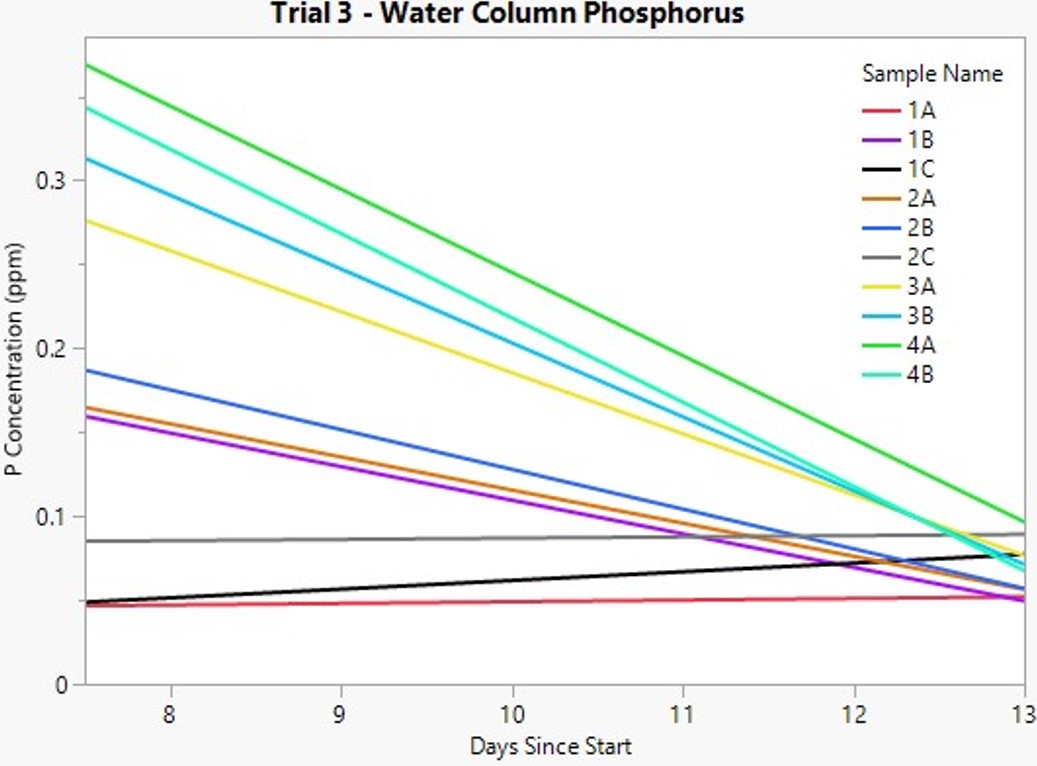
We diluted and dosed lake water accordingly to monitor P behavior when P is artificially removed or added to the system and permitted to mix with sediment.
Conclusions
Our bench-scale tests and in situ tests demonstrate evidence of P exchange behavior maintaining lake background concentrations in response to increased or decreased P. Based on our data, P exchange occurs quickly; most changed concentrations will approach a common background level within 1 week.
Our current data is extremely encouraging in support of our hypothesis. These data will enable more informed decision-making regarding lake restoration efforts to reduce the harmful effects of eutrophication
BYU Environmental Engineering Laboratory

Dept. of Civil and Environmental Engineering